Snapshot No. 845-849
NHK Medium Wave AM Radio No.2 has closed.
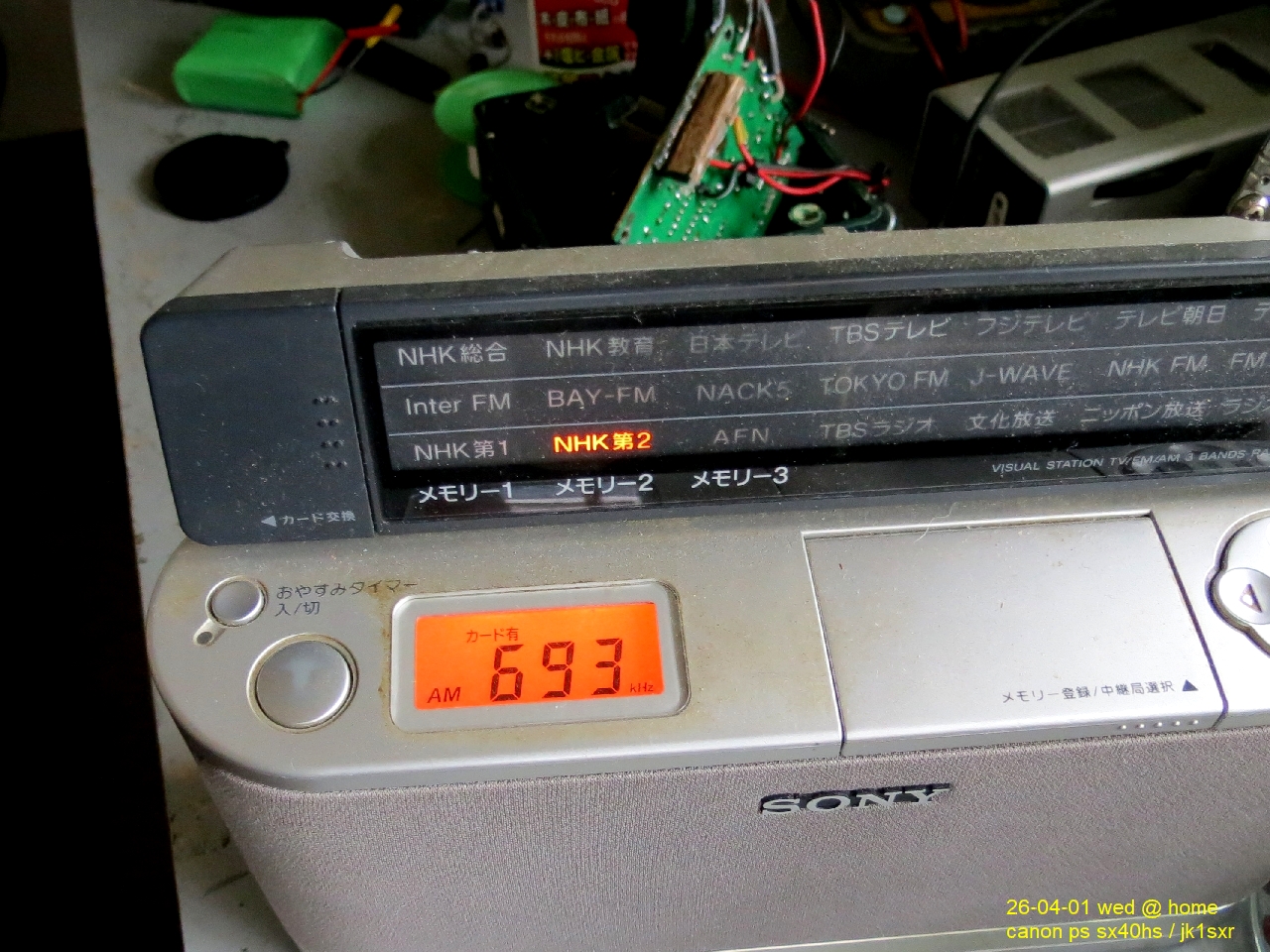 Just checked the 693kHz (500kW, Saitama/Kuki station) this morning.
Yes, only static noises.
Out of the 47 commercial AM radios, 44 stations are scheduled to close by the 2028 autumn.
This is a worldwide trend. As the long wave broadcasts had ended long before, those of medium wave as business are going to end.
Under these circumstances, some countries allow the low power 1W - 100W AM stations for very limited areas like universities, hospitals.
One such application here is our familiar "1620 kHz highway radio". Its output is less than 5W.
Possibility for ham radio?
If most of the 530 - 1600 kHz range is open, we should seek a possibility that 950 kHz with say 20 kHz width, i.e., 1/2 subharmonic of the present top band of 1.9 MHz, be allocated to ham band.
As the receivers (portable radio) are already lying all over any home, making transmitters only enables us to communicate. In case of CW only operation, things are simpler. BFO is needed. But its function can be substituted by simply placing two portable radios side by side with either one detuning a little bit.
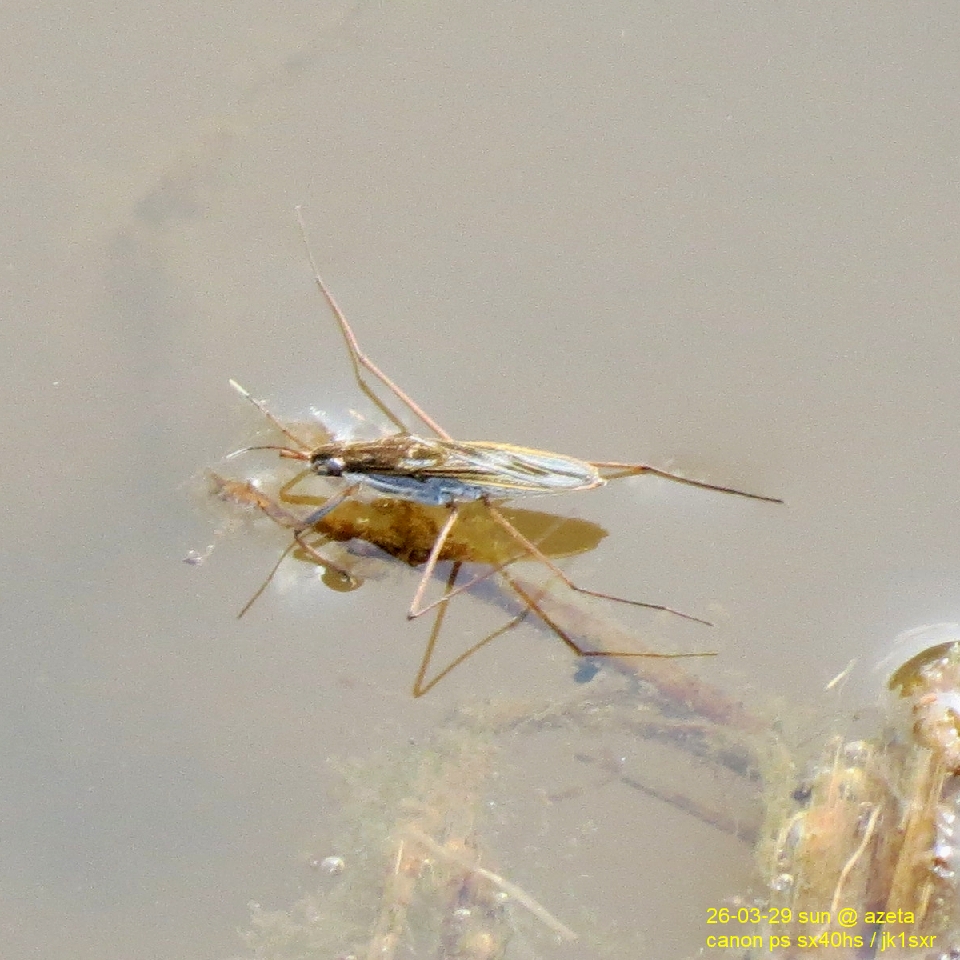
An amenbo which appeared on the water with the weather getting warmer.
It winters as an adult form on the ground, and appears on the water immediately with the warm weather.
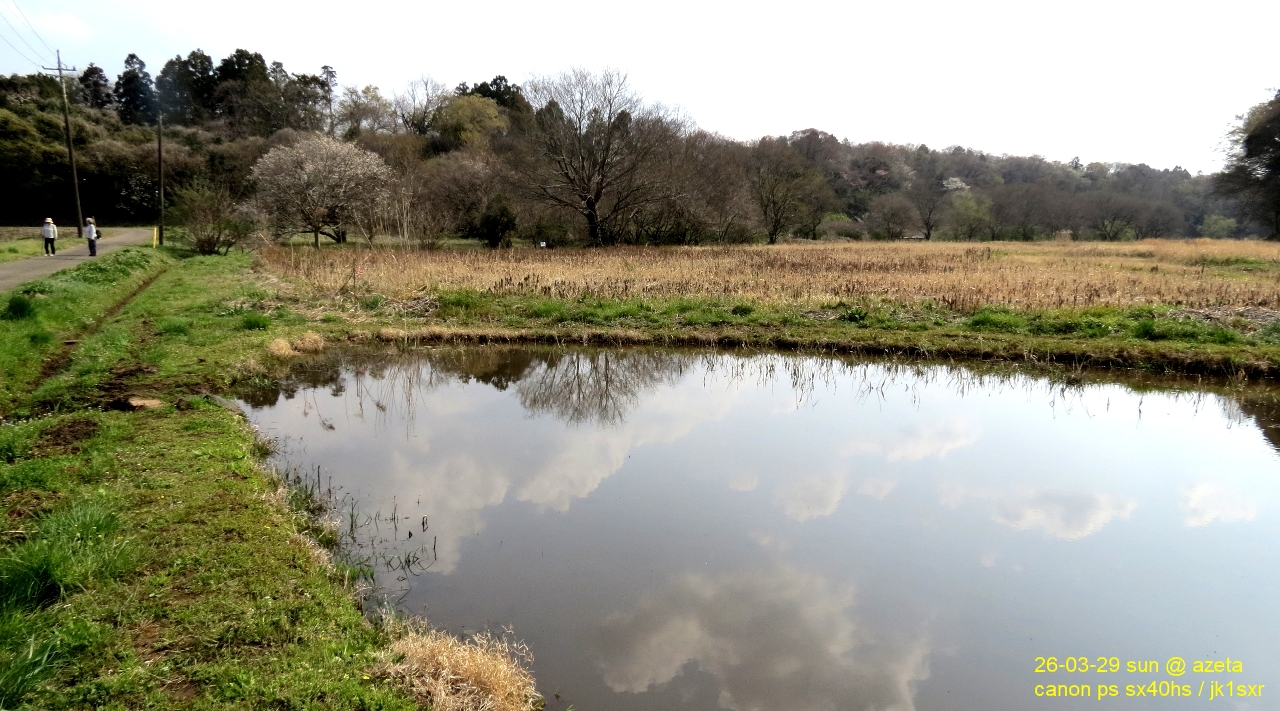
The right shows the place I took the shot.
Low-lying place, the so called "yati", "yatu", "yato" in between the high lands.
Though they are mostly used as paddy fields, this place is reserved for nature observation.
Below is a map of Geographical Survey Institute around this area.
3D modeling. The elevation is purposely incraesed by 7 times.
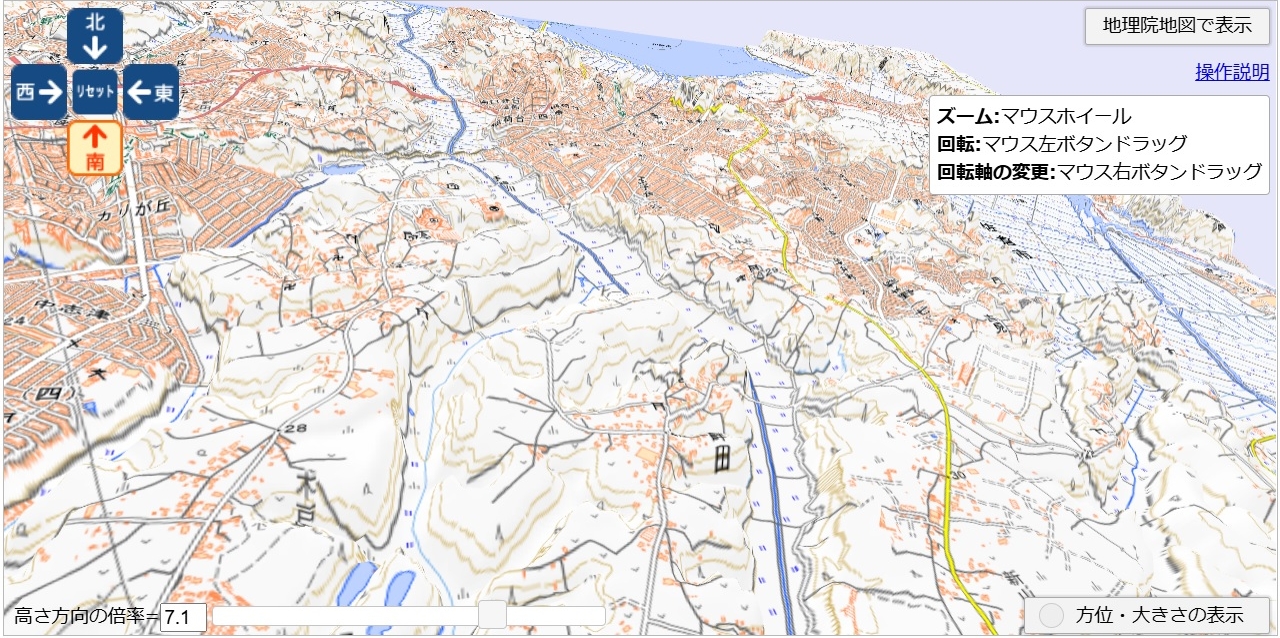 Borrowed from the map of Geographical Survey Institute
(In order to have the 3D map, first choose "tool" on the map right upper corner, and then select "3D".
It enables the view from above at any angle)
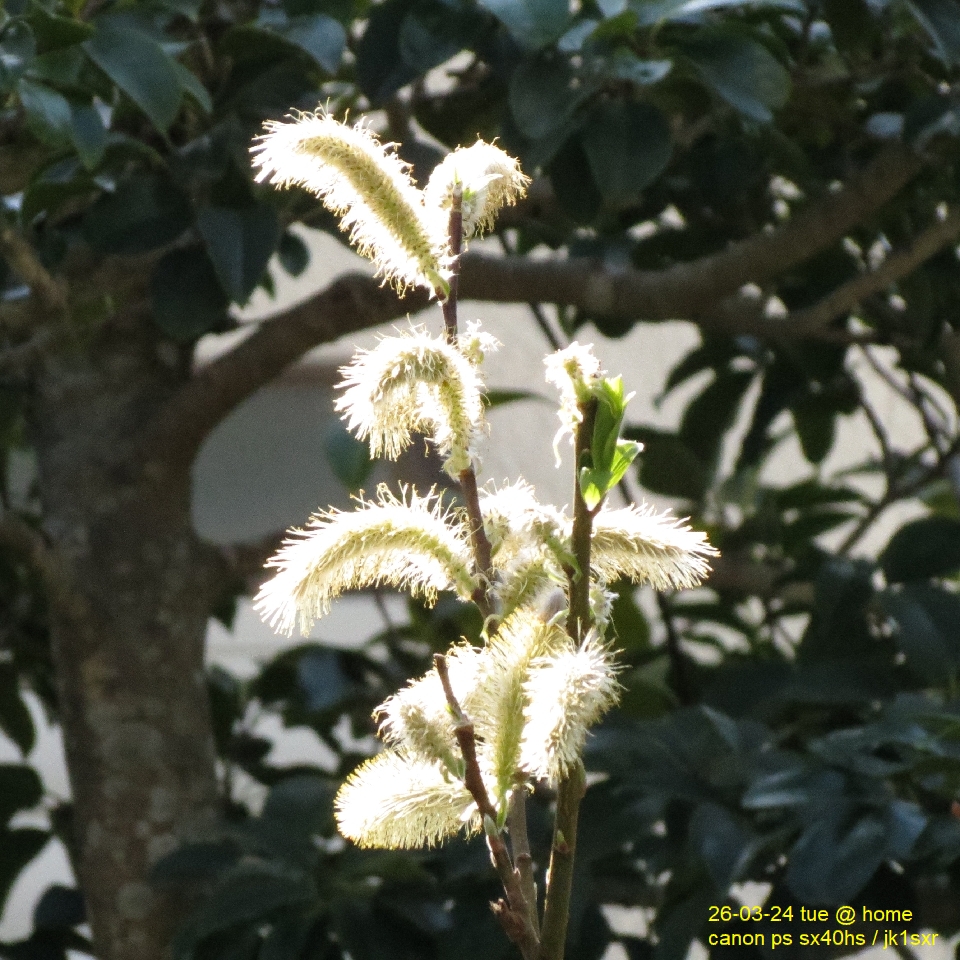
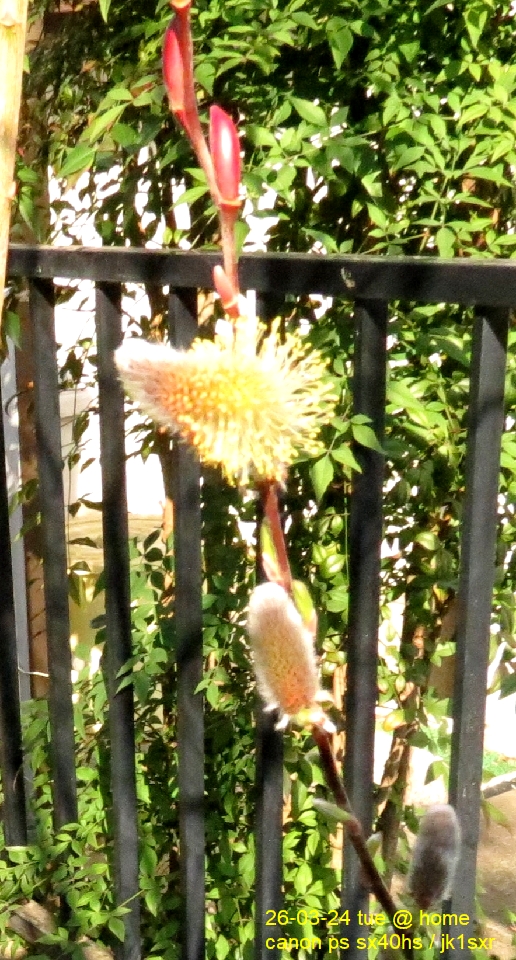
Neko-yanagi, this morning.
The right shows a branch having both buds and flower.
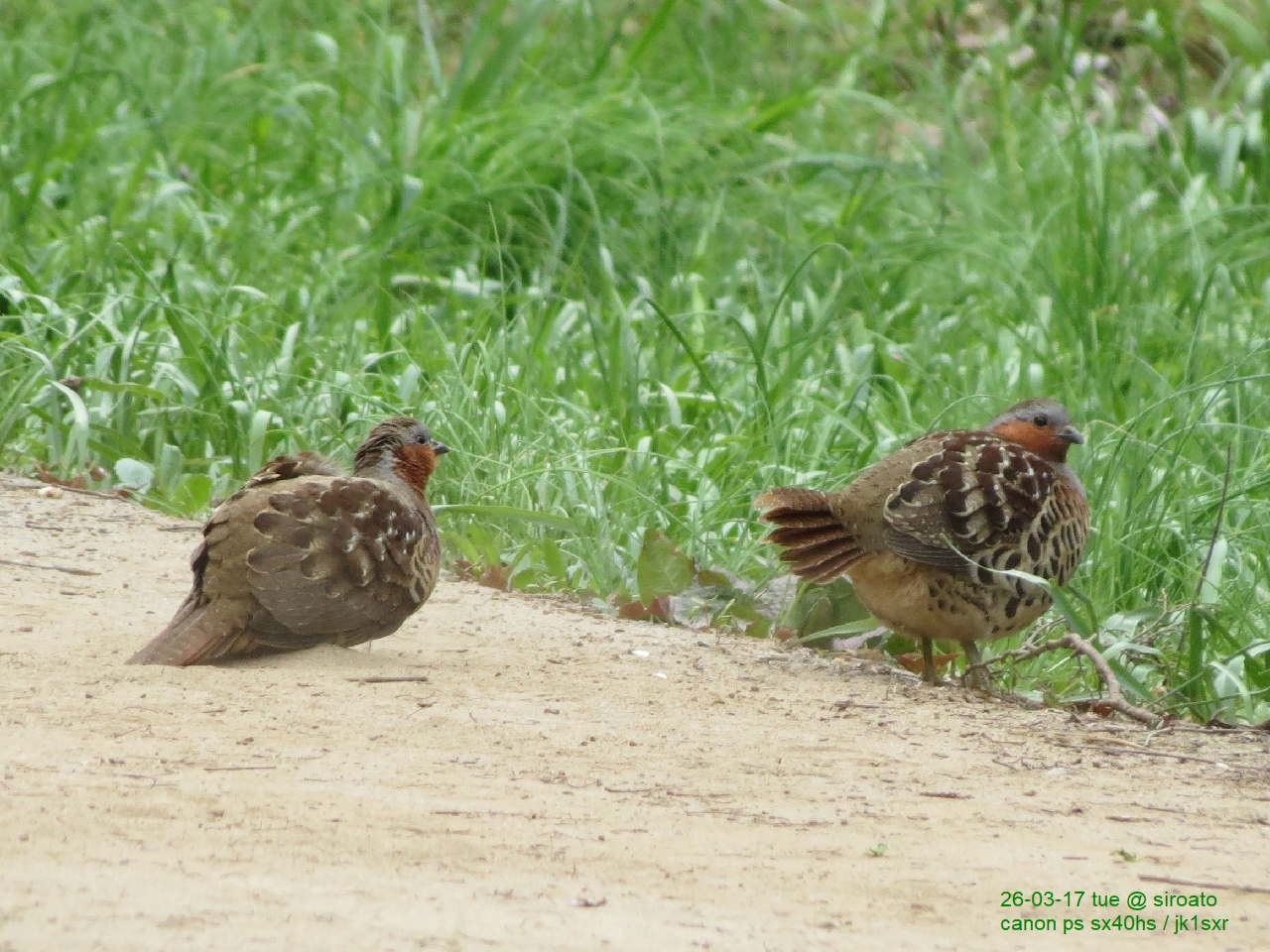
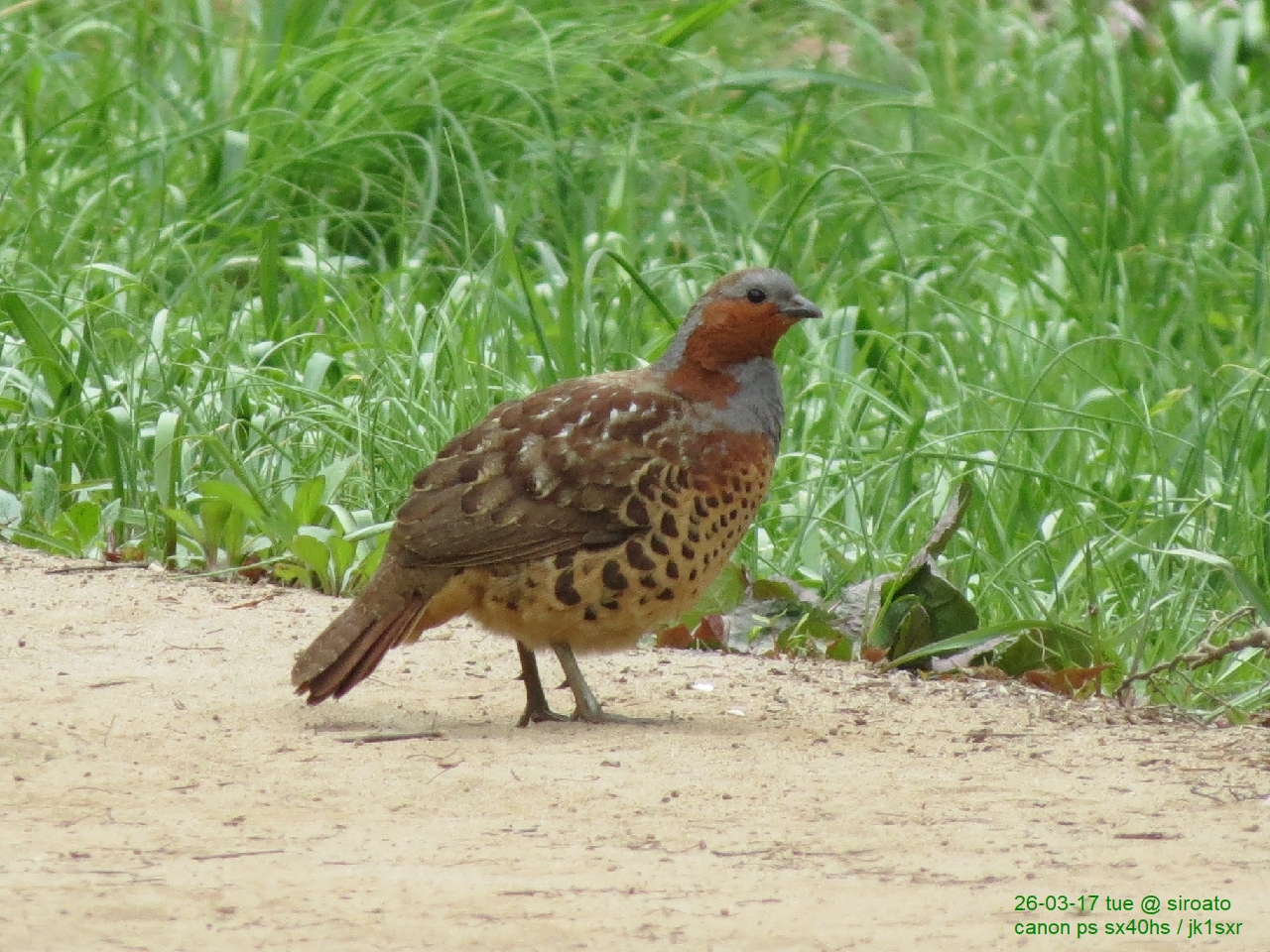
Kojyukei.
At the castle-ruin square, this noon.
We frequently hear this bird loudly singing, chotto koi, chotto koi (get over here, get over here), in many places. Howerver it seldome appears in front of us.
Though I had seen several times that bird momentarily crossing in path through woods, this is the first time I could take a good look.
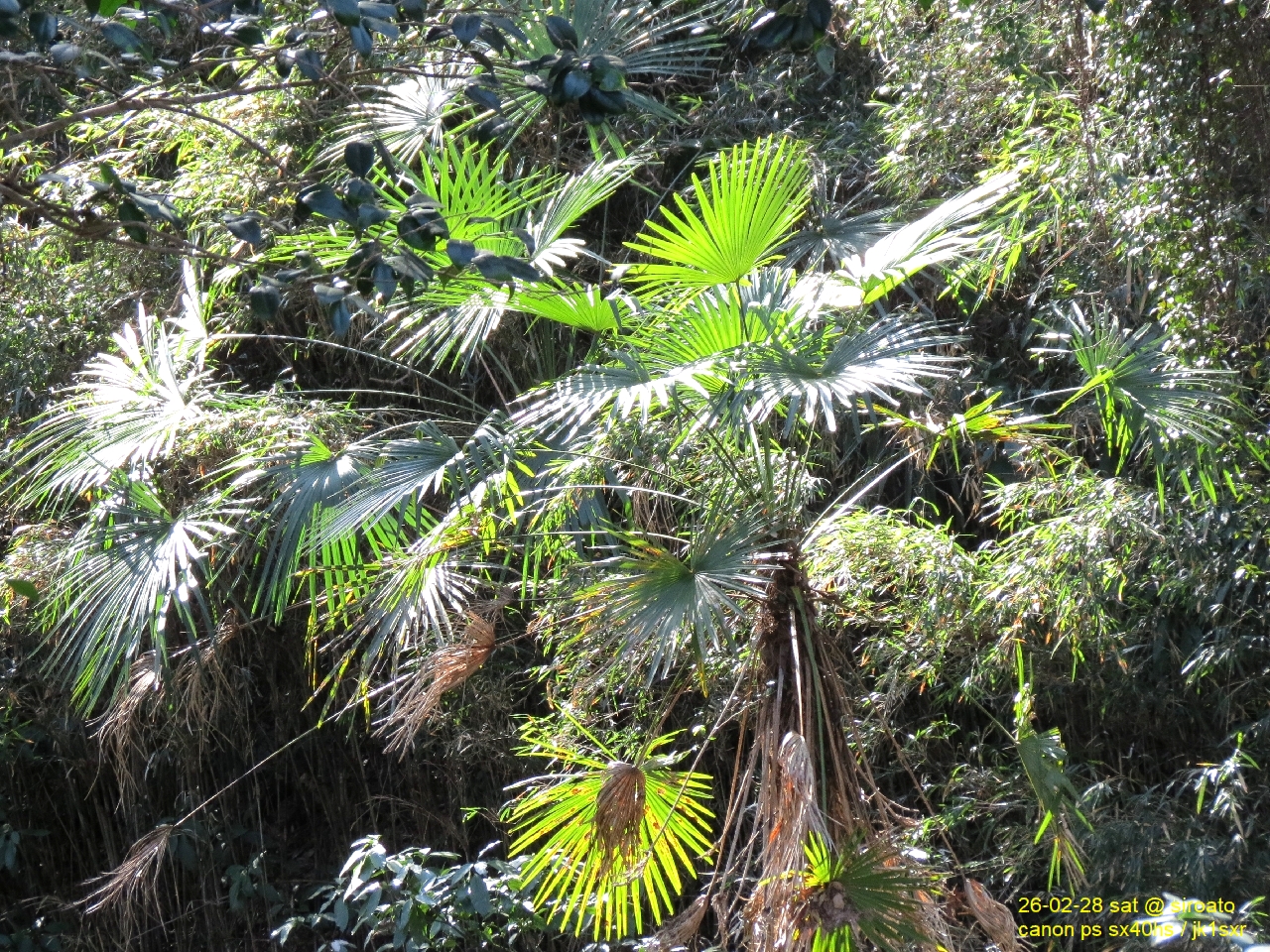
Shuro, seen last week, in a moat of the nearby castle ruins park.
They look very lively, even in the midst of winter, for a palm family.
The moats of this castle have no water, and various plants grow on their own at the bottoms.
I have observed here for more than 40 years, and noticed that shuro's population has been increasing recently.
26/R8-04-01 wed
849. New top-band?NHK Medium Wave AM Radio No.2 has closed.
Just checked the 693kHz (500kW, Saitama/Kuki station) this morning.Yes, only static noises.
Out of the 47 commercial AM radios, 44 stations are scheduled to close by the 2028 autumn.
This is a worldwide trend. As the long wave broadcasts had ended long before, those of medium wave as business are going to end.
Under these circumstances, some countries allow the low power 1W - 100W AM stations for very limited areas like universities, hospitals.
One such application here is our familiar "1620 kHz highway radio". Its output is less than 5W.
Possibility for ham radio?
If most of the 530 - 1600 kHz range is open, we should seek a possibility that 950 kHz with say 20 kHz width, i.e., 1/2 subharmonic of the present top band of 1.9 MHz, be allocated to ham band.
As the receivers (portable radio) are already lying all over any home, making transmitters only enables us to communicate. In case of CW only operation, things are simpler. BFO is needed. But its function can be substituted by simply placing two portable radios side by side with either one detuning a little bit.
26/R8-03-30 mon
848. Amenbo
An amenbo which appeared on the water with the weather getting warmer.
It winters as an adult form on the ground, and appears on the water immediately with the warm weather.
The right shows the place I took the shot.
Low-lying place, the so called "yati", "yatu", "yato" in between the high lands.
Though they are mostly used as paddy fields, this place is reserved for nature observation.
Below is a map of Geographical Survey Institute around this area.
3D modeling. The elevation is purposely incraesed by 7 times.
Borrowed from the map of Geographical Survey Institute
(In order to have the 3D map, first choose "tool" on the map right upper corner, and then select "3D".
It enables the view from above at any angle)
26/R8-03-24 tue
847. Neko-yanagi
Neko-yanagi, this morning.
The right shows a branch having both buds and flower.
26/R8-03-17 tue
846. Chotto koi
Kojyukei.
At the castle-ruin square, this noon.
We frequently hear this bird loudly singing, chotto koi, chotto koi (get over here, get over here), in many places. Howerver it seldome appears in front of us.
Though I had seen several times that bird momentarily crossing in path through woods, this is the first time I could take a good look.
26/R8-03-05 wed
845. Shuro at dry moat
Shuro, seen last week, in a moat of the nearby castle ruins park.
They look very lively, even in the midst of winter, for a palm family.
The moats of this castle have no water, and various plants grow on their own at the bottoms.
I have observed here for more than 40 years, and noticed that shuro's population has been increasing recently.
Copyright © 2013 JK1SXR/m.abe. All Rights subject to common sense.